Picture this: you're scrolling through jewelry listings and spot a stunning red gem labeled "ruby" at a suspiciously low price. Your inner magpie gets excited, but your brain whispers: This seems too good to be true. You're not alone—most people assume any crimson stone qualifies as a precious ruby or that darker hues automatically mean higher value. Reality? Ruby rarity operates like a VIP club with strict entry rules: specific mineral cocktails, near-perfect growing conditions, and minimal human "enhancements." We're breaking down why these gems are geological unicorns and how to spot the real rockstars.
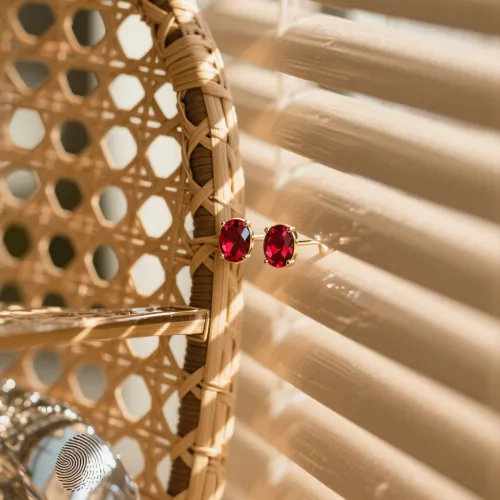
Many assume "ruby" is just a fancy name for any red sparkly rock. This mix-up happens because jewelers sometimes loosely use "ruby" for anything from garnets to red spinels—especially in non-specialist stores.
Real talk: Only corundum (the mineral family of sapphires) gets ruby status if it contains enough chromium for true red saturation. Stones without that chemical signature? Posers riding ruby's coattails. Proof comes from lab tests—real rubies clock a refractive index of 1.762-1.770 and hit 9 on the Mohs hardness scale. They’ll scratch glass while garnets won’t.
Here's how to verify: Grab a loupe and look for double refraction—visible facet doubling under magnification. Spinels and garnets won’t show this effect. Notice surface luster too; dullness suggests lower-grade material like red glass.
Tradeoffs exist though: Some pinkish stones hover at the ruby/sapphire boundary. Industry rules call it a ruby if red dominates, but gemologists might disagree. When deciding, prioritize saturated color over borderline cases. Remember: Weak reds = weak value credibility.
Conventional wisdom says "deeper red = better ruby," right? This leads shoppers to chase the darkest stones assuming scarcity. The catch? Overly dark rubies can look muddy or brown under normal lighting—like cheap wine versus Cristal.
The reality: Top-tier "pigeon-blood" rubies balance vivid saturation with pure red hues—no brown or pink undertones allowed. Why the hype? This perfect storm requires specific chromium levels plus minimal iron interference—a rare geological cocktail found mostly in Burmese mines. Even there, most stones show uneven color distribution or secondary tones.
Use this field test: Examine stones under direct white light. Cloudy days = cheat mode since indirect light reveals true undertones. Uneven saturation? Pass—unless you want a "character piece" at bargain rates. Also grab a UV flashlight: Strong red fluorescence often signals that sweet premium color.
What complicates things? Dealers might cut darker rubies shallow to boost brightness—making them seem richer than they are. Judge proportions with calipers; stones wider than deep may be hiding flaws. For max brilliance, choose medium cuts over extreme shallows.
Spoiler: Not all rubies come with destination glamour. When you hear "Burmese ruby," you typically picture premium goods, assuming origin doesn't affect scarcity much. But here’s the tea—Myanmar (formerly Burma) has unique marble deposits trapping chromium without iron contaminants, creating world-beating color. Other sources? Often volcanic, with iron dilution dulling the red sparkle.
The cold truth: Mozambique produces respectable rubies, but Burmese stones dominate the rarity game. Why? Burmese mines yield less than 5% high-grade material annually from marble-hosted deposits—an uncommon geological scenario. Bonus credibility: These show intense fluorescence under UV. Synthetic rubies? Mass-produced and abundant as plastic straws.
How to sleuth origins without a lab: Check fluorescence strength first. Strong red glow under UV? Possibly Burmese. Then inspect inclusions under magnification: Rutile "silk" needles often indicate Myanmar, while angular crystals might point to Mozambique. Remember though—geographic prejudice can inflate prices artificially.
Let’s acknowledge nuance: Vietnamese rubies can sometimes match Burmese quality, while Thai rubies tend reddish-brown. Value fluctuations happen even within regions—a no-name mine occasionally births unicorns.
Many first-time buyers don’t ask about treatments, assuming all "natural rubies" achieve beauty independently. This lets jewelers quietly sell heated stones at near-premium prices. Plot twist: Heating is like auto-tuning for rubies—fixing flaws so common that ≤90% undergo it. The catch? Once treated, they lose rarity privileges.
Raw numbers prove it: Untreated ≈5% of market rubies show top color naturally. Heat-treatment dissolves inclusions and intensifies color—but it voids the "as-Earth-made" premium. Some treatments even leave internal traces called "heat halos" detectable under scopes.
Become a treatment detective: Always request certification papers. No docs? Magnify those inclusions: Melted fissures or blurred silk patterns scream heat treatment. Also consider cost—untreated ruby prices skyrocket faster than heated ones.
The balancing act? Enhancement-stable rubies may outlast untreated stones with fragile inclusions. But rule of thumb: For heirloom investments, skip treatments. Budget shoppers can embrace heated stones—just know 20-50% value penalties occur versus natural peers.
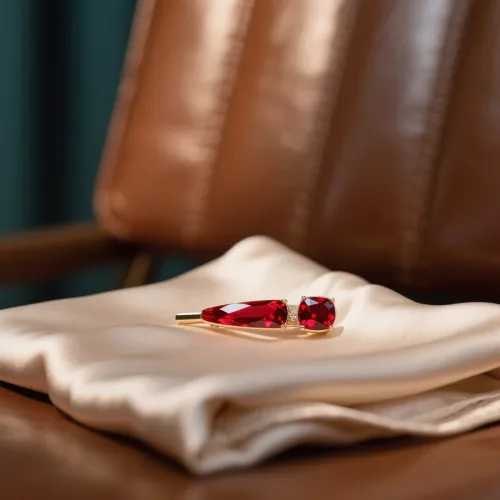
It’s natural to crush on massive jewels—after all, larger diamonds fetch higher premiums. Rubies flip this script: Stones over 5 carats are exceptionally rare. Why? Corundum forms small under pressure, and inclusion spots multiply in bigger crystals. Most museum-grade giants are semi-transparent at best.
The inside scoop: Crystal growth limitations mean flawless rubies above 10 carats are practically myths—the Smithsonian’s Rosser Reeves Star Ruby is 138 carats... but packed with inclusions. Factually stunning: Flawless >3ct rubies rival large diamonds in scarcity per annual mine yields.
Size-spotting tricks: Grab a scale and calipers. Rubies clock density near 4.0—so unusually heavy stones may be fakes. Also inspect edges: Imitations often bulk up with thick girdles. For inclusions, use 10x magnification: Silk needles can verify natural origins, but fracture clouds? Red flags for fragility.
Tradeoffs intensify here: Smaller stones with eye-clean clarity may outperform larger included ones value-wise. If you love statement pieces, prioritize spread over carats—well-cut 2ct rubies face-up larger than chubby 3ct specimens. Cut quality? Non-negotiable for light performance.
Buyers often hunt for price-per-carat formulas like diamond’s 4Cs, assuming predictable valuation. Surprise: Two rubies identical in size can be $5K vs. $50K gems. Value volatility erupts because origin, treatments, color saturation, and flaws interact uniquely per stone—like fingerprint economics.
Stats reveal why: Auction records show premiums for pigeon-blood Burmese rubies hit $1M/carat recently… while commercial-grade heated stones languish around $100/carat. This spread mirrors their fundamental rarity gaps. Unlike diamonds, ruby pricing lacks universal formulas—each purchase is a bespoke negotiation.
Smart-value checks: When evaluating a deal, list these four pillars: Color > Origin > Clarity > Carats. Then cross-reference with labs or dealers for region-specific premiums. Suspect pricing anomalies? Compare fluorescence intensity and treatment disclosures against market reports.
Final judgment rule: Pay premiums only for objective traits—certified origin, verified no-treatment status, and balanced proportions. Subjective qualities like "best red ever seen" decay over time while documentation lasts.
Q: Are synthetic rubies considered rare?
A: Not remotely—they’re mass-produced using flame fusion at factories. Natural rarity comes from 50+ million year geological processes, while synthetics bake in days. Price gap? Natural rubies cost 10-1000x more.
Q: Why do some rubies glow like lasers under UV?
A: That’s UV fluorescence! Burmese rubies shine strongest due to chromium purity without iron. It’s nature’s hologram sticker distinguishing elite stones worth premium valuations.
Q: How often do mines find ruby jackpots?
A: Finding gem-quality rubies is like winning geological bingo—most finds are industrial-grade. For every 100 mined rubies, maybe one qualifies as jewelry-grade. Untreated pigeon-blood? Rarer than albino elephants.


$
