Picture yourself browsing a gem show, spotting a ruby ring glowing like crushed velvet under the display lights. Your brain whispers: "Ruby = instant wealth." Before your fingers start dialing the bank manager, let's unpack that impulse. Spoiler: the journey from mine to jewelry case involves more plot twists than a detective series. We all wrestle with gemstone myths—like assuming deep red means top dollar or believing size guarantees value. Reality's juicier: Rubies play by their own cryptic rules where microscopic quirks and geographic backstories massively sway the price sticker. Buckle up as we decode ruby economics through raw geology, market mechanics, and the telltale signs separating treasure from tourist trinket.
The classic assumption? That any deep red ruby instantly screams "expensive." Seems logical—blood-red intensity feels luxurious, right? Problem is, gem worlds run on nuance, not blanket statements.
Real talk: Only specific shades actually fetch peak prices. We're talking "pigeon-blood red"—a hypnotic crimson with optimal saturation and subtle blue fluorescence that makes the stone appear lit from within. Darker tones looking muddy under light or reddish with orange hints? Those often sit lower down the value ladder. This isn't about personal taste; chromium composition interacts with crystal structure to create that magic combo. Stones displaying it? Think auction-house darlings with price tags that'll make your eyes water.
Whip out your visual toolkit. Examine stones against plain white paper under daylight-equivalent bulbs. No fancy setups—just observe the red saturation. Does it radiate consistently without brown undertones or fade at the edges?
Here's the catch: Achieving perfect saturation often involves tradeoffs. Rubies supercharged with color-inducing elements sometimes suffer cloudiness from microscopic rutile needles. That's why decision rules favor stones balancing clarity and vibrancy like mid-saturation options without noticeable gray veiling.
We've all fallen for this: Assuming bigger always equals pricier in gems. Rubies must follow suit—double the carats, double the cost, right? Seems simple math.
Turns out, ruby pricing laughs at linear thinking. Small rubies below 0.8 carats? Relatively abundant. But cross that two-carat threshold with eye-clean transparency? Rarity spikes harder than crypto on hype fumes. Why? Forming large chromium-rich crystals without cracks or inclusions is geological lottery stuff. Translation: per-carat costs leap exponentially for premium stones above two carats.
Notice the carat-weight sweet spots. Use digital calipers—or compare dimensions against certified gems. High-value zones focus on 0.5–1.5 carat stones where color and clarity still dazzle without rarity surcharges. Spot asymmetrical cuts? They often indicate weight-retention efforts with lower-grade material.
The tradeoffs bite hardest here: Bigger stones are inclusion magnets. So when comparing, divide price by carats and cross-check against transparency levels. Larger sizes showing minimal silk might trump flawless-but-tiny alternatives in long-term appreciation.
Mention "Burmese ruby," and dollar signs blink in buyers' minds. The assumption rolls deep: Burma = unicorn-tier stones commanding universal premiums. Feels historical, glamorous...and oversimplified.
Let's reset: Yes, Burmese rubies often reign supreme at auction, helped by nostalgic allure and historic mines like Mogok. But here's the twist—modern finds in Mozambique or Thailand produce stones with nearly identical visual impact. Often sold at lower percentages of Burmese prices? Absolutely. Reality check: Origin alone isn't the golden ticket; it's combinations with untampered integrity and benchmark color hitting perfect scores.
Look for secondary clues if certificates lack origin details. Burmese specimens frequently fluoresce intensely under UV, giving them that inner glow collectors faint over. But don't dismiss African gems—many display similar characteristics.
Navigating this means prioritizing documented properties over geography nostalgia. Sometimes Mozambique stones offer identical quality minus the heritage surcharge—meaning rule one should be: Focus on observable traits confirmed via magnification, not legendary names alone.
Popular belief warns: "Treated = cheap imposter chasing real ruby glory." Natural and untreated gets equated with purity and peak investment value automatically.
Time for some gem gossip: Heat treatment (applied carefully at 1800°C) is an open industry secret, stabilizing color and dissolving inclusions in about 90% of market rubies. Well-disclosed heat? Barely dents value versus untreated stones. Real trouble emerges with undetected glass fillings that mask fractures—creating deceptive sparkle while structurally weakening stones. Those plummet resale prospects.
Arm yourself with a loupe. At 10x magnification, scan stone surfaces for "flow pattern" residues around cavities—that hazy honeycomb look is glass or resin treatment fallout. Natural fractures look sharper at angles without those glue-like halos.
Acceptability tiers matter: Always choose certified heat-treated over gems with polymer injections unless you're prepared for durability issues and ethics scrutiny later. Value-seekers should hunt stones where treatment stays minimal and fully recorded by labs.
Crystal-clear rubies feel like the obvious high-enders, fueled by marketing that equates flawless gems with maximum worth. The logic sticks: More sparkle, higher price. Period.
Counter-intuitive truth incoming: Flawlessness can actually suggest synthetic origins. Natural high-end rubies? They frequently flaunt inclusions like rutile needles—which diffuse light so beautifully they intensify red hues. Totally eye-clean stones with high transparency remain scarce and command premiums...but minor silk formations aren't dealbreakers. It's about balance—minor imperfections telling authentic tales without clouding the gem's brightness.
Inspection pro tip: Rotate the stone under bright light. Cloudy or milky zones? They lower transparency and value. Wandering rutile needles creating velvety color? That adds character without tanking worth if the gem faces-up clean.
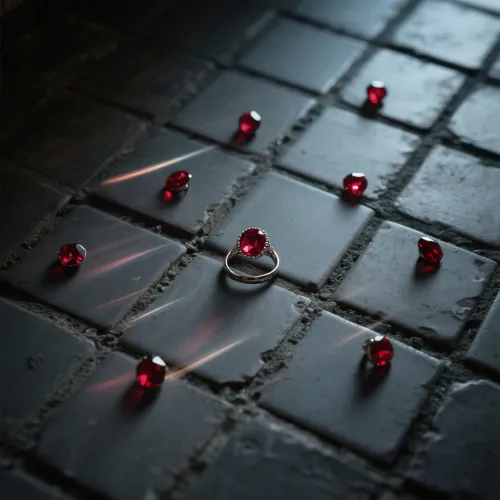
This clarity tightrope matters when setting budgets: Mid-price gems may prioritize clean vision over microscopic perfection, while collectors chase stones where rutile inclusions boost color visibly without disrupting light play.
"It's labeled ruby—so it's earth's authentic creation!" Sounds right, feels romantic. But gem scenes overflow with synthetics, leading some buyers to inadvertently pay natural ruby prices for lab-made cousins.
Clarification critical: Authentic natural rubies form underground across millennia; synthetics grow quickly in controlled environments. Despite identical appearances to naked eyes, microscopic distinctions exist—bending factory-like curved growth lines for lab rubies versus angular patterns in naturals. Pricing divergence is massive too: Synthetics might cost a hundred bucks versus thousands for similar-looking naturals.
Cue verification protocols: Whip out that loupe again. Authentic stones typically show straight mineral inclusions and "fingerprint" patterns around crystals under magnification—unlike manufactured stones' bubbly residues or unnatural color zoning.
Always pair visual checks with certification for investments. Synthetic = ethical choice if labeled correctly—but claiming natural status without proof? That's where value evaporates faster than spit on a hot skillet. Decision rules prioritize stones with verified origins and consistent documentation trails.
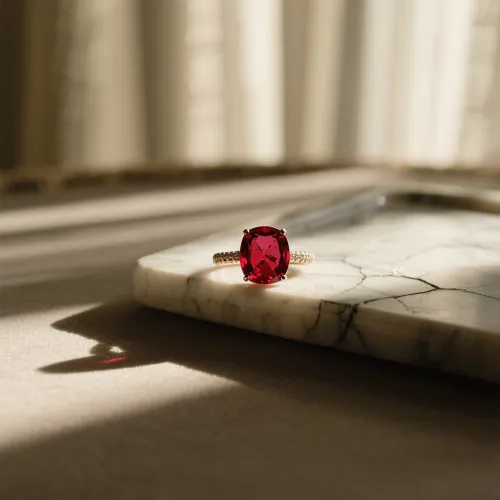
Q: What defines pigeon-blood red in rubies?
A: It's a specific deep crimson tone characterized by saturated red appearance under light, often with a faint blue fluorescence boost enhancing its velvety look naturally—not just any dark shade qualifies.
Q: How can I spot simulated rubies?
A: Check for suspicious perfection under loupes: Curved grain lines, absence of rutile needles, or gas bubbles signal likely lab origins instead of geological formation.
Q: Do rubies handle daily wear?
A: With a Mohs hardness rating of 9, they're durable for rings—though fractures filled with glass may weaken over years of regular knocks.
Q: Why do some glow under blacklight?
A: UV light excites chromium atoms, triggering vibrant red fluorescence which may boost perceived color intensity in untreated gems.
Q: Where are rubies mined globally?
A: Significant sources include Myanmar's mythic mines, plus Vietnam, Thailand, and Mozambique where high-grade rubies contribute to modern market availability in varied qualities.


$
